
Quick take: Walk Nanluoguxiang south-to-north via Subway Exit E. Head west toward the Drum Tower, cut through Yandai Xiejie, and finish at Silver Ingot Bridge for Houhai sunset. Total distance ~2.5 km. Set off between 2:30‑3:00 PM for ideal late‑afternoon light.
- A field‑tested walking route with realistic timing
- Curated street‑food picks and clear items to skip
- Quiet residential side hutongs that still show old‑Beijing daily life
- Low‑crowd sunset viewpoints around Shichahai
- Honest warnings for tourist‑traps including overpriced bamboo‑tube milk tea
The Honest Take: What Nanluoguxiang Actually Feels Like
Nanluoguxiang deserves a spot on your Beijing itinerary, yet it is no untouched quiet historic lane. This is a bustling, crowded pedestrian strip full of energy — and that is exactly why visitors keep coming.
On my first visit, I arrived expecting picture‑perfect old‑Beijing charm. Instead I was met with clouds of grilled‑skewer smoke, shop‑loud pop music, and long queues for fancy cheese‑infused tea. I nearly turned around and left.
Everything shifted once I stepped into Yuer Hutong, just a few metres off the main thoroughfare. Noise dropped sharply. An elderly local washed vegetables outside a courtyard gate. A bicycle pulling a wooden cart trundled slowly past. That stark contrast between chaotic main street and calm residential side alleys is the real reason to visit.
Below I break down worthwhile spots, things you can safely skip, and how to plan a rewarding visit.

How to Get to Nanluoguxiang (Subway Is the Smart Choice)
Subway (strongly recommended): Take Line 6 or Line 8 to Nanluoguxiang Station. Use Exit E, which opens directly onto the hutong’s southern entrance.
Bus: Bus routes 3, 4, 13, 42, 60, 118, 612 and Sightseeing Bus 3 stop nearby. Traffic in this historic zone is highly unpredictable. Unless you are already riding one of these lines, stick with the metro.
Taxi / Didi: Workable in off‑peak hours. Avoid ride‑hailing after 3 PM on weekends; a short 5‑minute journey can stretch to 20 minutes in gridlock. Show your driver this Chinese text: 南锣鼓巷.
Layout: One Main Alley, Sixteen Side Hutongs
Nanluoguxiang stretches 787 metres north‑south. Eight hutongs branch east, another eight west, forming a classic fishbone‑style street grid laid down under the Yuan Dynasty (1271‑1368). Locals sometimes nickname it the “Centipede Street”.
Nearly all shops and tourist activity occupy the main lane. Most side alleys remain genuine residential quarters where multi‑generation families still live within siheyuan courtyard homes.
What to Actually Do in Nanluoguxiang (Step‑by‑Step)
Explore side hutongs first; save the main street for later
Most tourists rush straight onto the crowded main strip, get overwhelmed by crowds and noise, and depart prematurely. Do not repeat that mistake.
Begin with these quieter residential lanes where ordinary local life remains visible:
- Yuer Hutong: More peaceful than most, home to Qi Baishi’s former residence.
- Fuxiang Hutong: Deeply residential; laundry hangs over doorways, locals play chess on slow afternoons.
- Heizhima Hutong (“Black Sesame Hutong”): Narrow, photogenic, with far fewer tourist crowds.
Wander these side lanes first. Tackle the busy main commercial street afterward, when you are ready for crowds, noise and street‑food stalls. This sequence delivers a far richer hutong experience.
Practical note: Many courtyards are private homes. Do not peer through gates or step into private compounds.
Qi Baishi’s Former Residence — manage your expectations
Located at 13 Yuer Hutong, this modest siheyuan was where the celebrated painter spent his later years. The building itself is authentic, yet exhibits are limited: mostly print reproductions, a small collection of personal belongings and a tiny courtyard garden.
Stop for 5 minutes if you enjoy traditional courtyard architecture. Skip it if your schedule is tight.
Opening reminder: Double‑check opening hours before arriving; this small site occasionally closes for maintenance.
Street food — pick carefully
✅ Worth trying
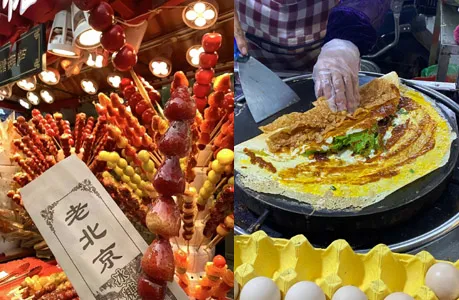
- Jianbing (savoury crepe): Prioritise stalls with queues of local residents rather than tourist‑only lines.
- Tanghulu (candied hawthorn skewer): Iconic Beijing street snack, balanced sweet‑sour flavour.
- Wenyu Cheese Shop: Tiny local store serving thick, sweet traditional Beijing cheese; regularly lined up by local residents. Unique regional treat worth sampling.
- Guozi with ice‑cream: Hot crispy fried dough paired with cold ice‑cream; an unexpectedly satisfying local combo.
- Sanhe Daoxiangcun: State‑run classic pastry brand. Look for the “三禾” logo. Avoid the over‑priced Nanluoguxiang branch, though its pastries are genuinely traditional.
❌ Skip: Novelty insect skewers (scorpion, starfish and similar). These exist almost entirely for tourist photos; local residents rarely eat them.
Courtyard‑hidden cafes
Better‑quality cafe spots sit tucked inside renovated siheyuan courtyards within side hutongs. Step through a traditional wooden gate into an inner courtyard setting. Coffee quality is average, yet the atmosphere — grey brick walls, mature locust trees and relative quiet — is the real draw.
Best Time to Visit Nanluoguxiang
| Time | Experience |
| Weekday afternoons (3‑6 PM) | Prime visiting window: soft light, food stalls fully open, manageable crowd levels. |
| Weekends & public holidays | Best avoided: shoulder‑to‑shoulder visitor density across main lanes. |
| Weekday mornings before 10 AM | Quietest time for photography; most shops and food stalls remain closed. |
The Complete Walking Route (South‑to‑North)
This tested itinerary smoothly connects Nanluoguxiang toward Shichahai, timed to reach the lake for sunset viewing.
| Stop | What it is | Time needed |
| 1 | Nanluoguxiang (south to north) | 45‑90 min |
| 2 | Drum Tower & Bell Tower | 20‑30 min (exterior photos); 1 hr (interior climb) |
| 3 | Lingdang Hutong | 5‑10 min |
| 4 | Yandai Xiejie (Tobacco Pipe Slanted Street) | 15‑20 min |
| 5 | Silver Ingot Bridge & Houhai sunset | 30‑60 min |
| 6 | Tangfang Coffee rooftop (optional) | 20‑30 min |
Start: Nanluoguxiang Subway Station, Exit E
End: Shichahai or Beihai North Subway Station
Total distance: ~2.5 km
Recommended start: 2:30‑3:00 PM to catch lakeside sunset.
Segment 1: Nanluoguxiang → North Exit
Walk the full length of Nanluoguxiang from south toward north. Pause and detour into side hutongs along the way. Upon reaching the northern end, turn left (west) and walk roughly 5 minutes; you will see the Drum Tower ahead.
Segment 2: Drum Tower & Bell Tower
Two of Beijing’s most recognisable historic landmarks, used to keep official city time across the Yuan, Ming and Qing dynasties.
Photo tips:
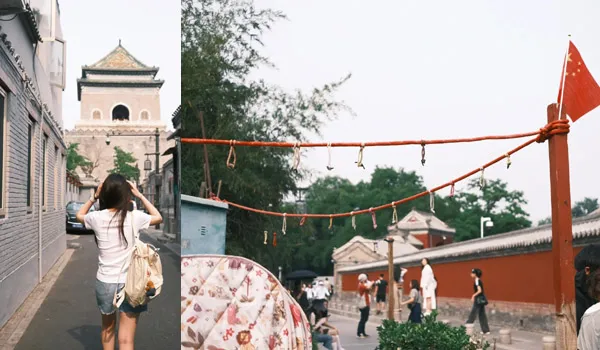
- Best exterior shot: Stand at the junction of Lingdang Hutong and the main road; frame the Drum Tower at the end of the narrow hutong lane.
- Close‑up composition: Position yourself between the two towers, shooting upward with bright red palace walls against open sky.
- Climb for rooftop views: The Drum Tower offers sweeping panoramic views over hutong roofscapes — one of very few elevated vantage points over old‑Beijing layout. Skip climbing if you have limited time.
Segment 3: Lingdang Hutong (photo stop)
A slender lane running between Drum Tower and Bell Tower. Classic hutong scenery: weathered grey brick walls, aged wooden door‑frames, unobstructed sight‑lines toward the towers. Compose shots with the Drum Tower anchored at the far end of the lane. Late‑afternoon golden light works beautifully here.
Segment 4: Yandai Xiejie (Tobacco Pipe Slanted Street)
Walk west from Drum Tower for about three minutes to enter Yandai Xiejie. This narrow, winding street historically specialised in long‑stem tobacco‑pipe sales. Its literal translation means “Slanted Tobacco‑Pouch Street”.
What to expect: Compact, busy, heavily commercialised strip lined with souvenir stalls, snack vendors and surviving Qing‑era building facades.
Practical advice: Move through at moderate pace. Most souvenirs are mass‑produced merchandise. Focus your attention on old wooden storefronts and sloped traditional rooflines for historic charm. For keepsakes, hand‑cut paper art or small traditional toys deliver far better value than fake antiques. Many goods sold here can be found cheaper elsewhere.
Segment 5: Silver Ingot Bridge (Yinding Qiao) & Houhai Sunset
Yandai Xiejie leads directly to Silver Ingot Bridge. This modest stone arch connects Qianhai and Houhai lakes and represents the area’s most iconic viewpoint.
Standing on the bridge, you get open lake views framed by willow trees. On clear, low‑haze days you can spot the distant Western Hills — the famous historic scenic view known locally as “Silver Ingot Viewing the Western Hills”. Note: haze frequently obscures the mountain silhouette, so keep realistic expectations.
Sunset arrival timing guideline:
‑ October: 5:15‑5:30 PM
‑ Summer: 6:15‑6:30 PM
Golden sunlight reflects across the lake surface at sunset. Roughly 20 minutes after official sunset, blue‑hour light creates another magical mood for photography.
Things to do here: Capture sunset shots from the bridge; stroll along quieter lakeside paths afterwards. Pedal‑boat rental is available spring‑autumn, generally closing around 6 PM.

Segment 6: Tangfang Coffee (optional — rooftop terrace)
Situated above a shop close to Silver Ingot Bridge, this venue’s 3rd‑ and 4th‑floor terraces deliver unobstructed panoramic views over Shichahai and the distant Drum Tower.
Order suggestion: Mango shaved ice (shareable and refreshing). Coffee quality is average; the rooftop view is the main attraction.
Timing note: Arrive before 4:30 PM on weekends if you hope to secure terrace seating; spots fill fast before sunset.
Honest perspective: This is tourist‑oriented with higher‑than‑local‑cafe pricing. Still, few other spots let you sit above hutong rooftops without climbing a historic tower. Stop for one drink rather than a full meal.
Getting out
Two convenient metro options near the lake shore:
‑ Shichahai Station (Line 8): 5‑8 minutes walking from Silver Ingot Bridge.
‑ Beihai North Station (Line 6): ~10 minutes southbound along the lake.
For authentic dinner options, walk south toward Beihai Park. You will find far better local restaurants there compared to tourist‑focused lakeside dining spots.
Shichahai Area Overview
Shichahai lies northwest of the Forbidden City, a historic scenic zone formed by three interconnected lakes: Qianhai (Front Sea), Houhai (Back Sea), Xihai (West Sea). Its origins date back to the Jin Dynasty (1115‑1234). Under Yuan rule, it thrived as the Grand Canal’s northern terminal harbour. Today it blends natural lake scenery, noble historic mansions and lively bar districts.
Access to Shichahai:
‑ Subway Line 8 to Shichahai Station, Exit A1/A2, then walk toward the lake.
‑ Or walk north from Nanluoguxiang: roughly 12 minutes to Houhai’s southern shore.
What to do in Shichahai:
- Lakeside paths: The full Houhai loop runs ~7 km. Stick to the pleasant stretch between Silver Ingot Bridge and Drum Tower for a shorter walk, do not miss Shichahai sunset at Silver Ingot Bridge.
- Boat rental: Operates spring through autumn. Pedal boats are tourist‑oriented yet genuinely relaxing.
- Skip Houhai main bar street if you seek authentic local nightlife: inflated prices and formula‑style tourist venues. Smaller bars tucked within nearby side hutongs offer better value and atmosphere.
Nearby Attractions (Walking Distance)
| Attraction | Distance | Time needed | Worth it? |
| Beihai Park | 10 min walk south | 1‑2 hrs | Yes — peaceful lake grounds plus the iconic white dagoba. |
| Prince Gong’s Mansion | 15 min walk west | 1 hr | Outstanding historic architecture; skip if short on time. |
| Soong Ching Ling Residence | 15 min walk northwest | 45 min | Only for visitors interested in modern Chinese history. |
| North Luogu Lane | 5 min north of Nanluoguxiang | 30 min | Calmer counterpart to Nanluoguxiang with far fewer shops. |
Seasonal Notes
| Season | What to expect |
| Autumn (Sept‑Nov) | Top travel season: mild temperatures, golden foliage, frequent clear skies. Sunset falls between 5:00‑6:00 PM. |
| Winter (Dec‑Feb) | Lakes freeze over; local residents ice‑skate on Houhai for a distinctive seasonal experience. Dress for bitter cold. |
| Spring (Mar‑May) | Willows turn green; cherry and peach blossoms around Beihai Park. Moderate tourist volumes. |
| Summer (Jun‑Aug) | Hot and humid. Start your walking route later, around 4 PM, to avoid midday heat. Carry water and sun protection. Mosquitoes can be noticeable in shaded hutong sections. |
Practical Reference — What to Skip & What to Buy
❌ Skip these:
| Item | Reason |
| Bamboo‑tube milk tea | Over‑priced (~28 RMB), heavy sugar content, often served warm on hot summer days. |
| “Antique” porcelain | 99 % mass‑produced modern replicas. |
| Insect skewers | Pure photo novelty; local people almost never eat them. |
| Main‑street souvenir shops | Identical goods available cheaper online or at city markets. |
| Houhai main bar street after 10 PM | Tourist trap: high prices, mediocre drink quality. |
✅ Worth buying:
- Hand‑cut paper art: Look for small‑scale vendors within side hutongs. Slightly uneven cut edges indicate genuine hand‑crafting.
- Calligraphy brushes: Test by wetting the tip; quality brushes hold a neat pointed shape.
- Traditional cloth shoes: Lightweight and comfortable. Typical price range 30‑80 RMB.
Quick Practical Tips
| Topic | Advice |
| Payment | WeChat Pay and Alipay widely accepted. Tiny street‑food stalls often prefer cash. Keep 100‑200 RMB in small‑denomination banknotes handy. |
| Maps | Main lanes have bilingual signage; remote side hutongs have no English signs. Apple Maps works without VPN; Google Maps requires VPN access. |
| Restrooms | Public toilets at both ends of Nanluoguxiang plus scattered points in side hutongs. Always carry your own tissue paper. |
| Crowd escape trick | If crowds feel overwhelming, turn into any side hutong and walk roughly 30 metres; visitor density drops rapidly. |
| Footwear | Wear robust, comfortable walking shoes. Expect 8 000‑12 000 steps over this route. |
| Clothing | Pack a light jacket starting October onward: lakeside temperatures drop sharply after sunset. |
| Gear | Power bank, reusable water bottle, small‑value cash notes for street‑food vendors. |
How Much Time to Allocate
| Duration | What you can cover |
| 1‑2 hours | Main commercial lane plus one‑two side hutongs. |
| Half‑day (4‑5 hrs) | Main lane, three‑four side hutongs, cafe break, full walk through to Shichahai. |
| Full day | Add Drum‑Bell Tower climb, Houhai boat rental, plus Beihai Park exploration. |
Frequently Asked Questions
What time should I start walking Nanluoguxiang?
Begin between 2:30‑3:00 PM. This leaves enough time for hutong wandering, Drum Tower photo stops, and arriving at Silver Ingot Bridge for sunset.
How long is the Nanluoguxiang‑to‑Shichahai walking tour?
Physical walking distance is ~2.5 km. With food stops, photo pauses and cafe breaks, budget 3‑4 hours total.
Which street foods are genuinely worth trying in Nanluoguxiang?
Jianbing savoury crepe, tanghulu candied hawthorn skewers and Wenyu local cheese are solid picks. Give insect skewers a miss; they exist for photos.
Is Nanluoguxiang free to enter?
Yes. The hutong is public street space with zero entry ticket cost.
Which side hutongs are best to explore?
Yuer Hutong (Qi Baishi former residence), Fuxiang Hutong (authentic residential vibe), Heizhima Hutong (narrow, photogenic lanes).
What is the best season for Nanluoguxiang and Shichahai?
Autumn (September‑November) delivers pleasant weather, golden foliage and clear skies. Winter also offers unique charm through Houhai ice‑skating.
Is Houhai main bar street worth visiting at night?
Not if authentic local nightlife is your goal. It is tourist‑driven with inflated pricing. Smaller bars hidden within nearby side hutongs give better atmosphere and value.
Final Piece of Advice
Treat Nanluoguxiang as a starting point, not your final destination. Use it for orientation and street‑food sampling. The real magic unfolds within quiet side hutongs and lakeside zones beyond the busy main commercial strip.
The crowded main lane delivers quick snapshots and tasty bites. Residential side hutongs show you unfiltered everyday Beijing life. Both deserve your attention — yet only one will linger in your memory long after your trip ends.
Follow this route as a loose framework rather than a rigid checklist. Feel free to turn down random side lanes that catch your curiosity. Those unplanned detours often turn into your most memorable travel moments.
About the author: Zhentour is a small collective of local residents and travel enthusiasts based across major Chinese cities: Shenzhen, Shanghai, Chengdu and Xi’an. Some team members are lifelong city locals; others relocated and have settled long‑term. Our mission is to close information gaps for overseas visitors to China by publishing practical, ground‑truthed travel guidance.
Research basis: This guide draws from repeated on‑site field visits March‑October 2026 plus conversations with long‑term Dongcheng and Xicheng district residents. All practical details including transit, rough pricing and sunset timings have been verified in‑person.
Disclosure: We accept no commercial payment for recommendations. All viewpoints are independent. If you spot changed conditions such as closed vendors, updated subway layouts or price shifts, please contact us. Our destination guides receive quarterly refreshes.
Last updated: September 2026