
If you’re traveling to Beijing, you’ve definitely scrolled past those viral postcard photos: endless golden imperial rooftops, razor-sharp symmetrical layouts, and a flawless bird’s-eye view of the Forbidden City. That iconic viewpoint isn’t inside the palace — it’s Jingshan Park, the small artificial hill standing directly behind the Forbidden City’s north gate. Best of all? This once-in-a-lifetime panoramic view costs just 2 RMB (roughly 30 US cents), cheaper than a basic cup of coffee.
To be honest, I almost skipped Jingshan on my first Beijing trip. After hours of wandering the sprawling Forbidden City, my feet were worn out, and I was ready to call it a day. But travel guides raved about its unbeatable skyline view, so I dragged myself across the road. It turned out to be one of my best travel decisions in the entire city. This tiny, underrated park absolutely lives up to every bit of its hype.
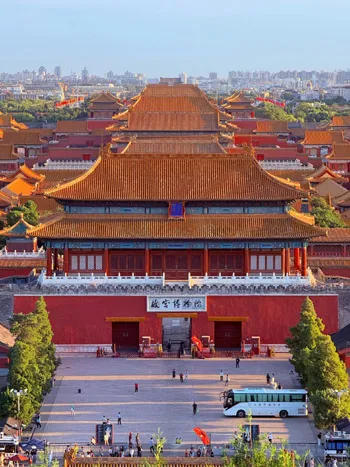
A Man-Made Hill Built From Forbidden City Moat Dirt
Jingshan Hill is no natural landmark — it’s a deliberate imperial construction dating back to the 1400s, during the Ming Dynasty’s Forbidden City development. Workers dug a massive defensive moat to encircle the royal palace, and all the excavated soil was piled up directly north of the complex. This artificial mound eventually became the highest point in old Beijing, overlooking the entire imperial capital.
For centuries, Jingshan served as the exclusive private backyard for Chinese emperors. Royal families hunted on its slopes, relaxed in its hilltop pavilions, and admired the grand Forbidden City from above. Rooted in traditional feng shui philosophy, the hill was also purpose-built as a spiritual barrier, shielding the imperial palace from negative energy and evil spirits.
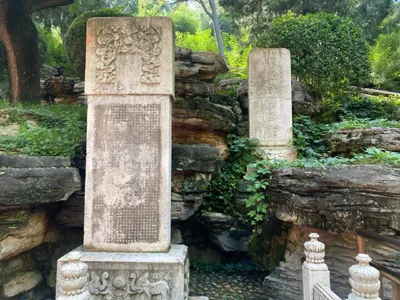
The park also bears profound historical significance. On its eastern slope stands the renowned “crooked tree,” the exact site where Chongzhen, the last emperor of the Ming Dynasty, hanged himself in 1644 as rebel forces captured Beijing. The original ancient tree was removed in 1971, but a replacement tree now marks this solemn historical spot, quietly nestled within today’s peaceful public park.
How to Get to Jingshan Park
Jingshan Park is located at 44 Jingshan West Street, Xicheng District. The easiest navigation trick is to simply look for the hill directly behind the Forbidden City’s north gate — no complicated address searching required.
- Metro (Most Reliable): Take Line 8 to Shichahai Station, exit through Exit C, then walk south for approximately 10 minutes. You’ll reach the park’s west wall and West Gate with zero confusion.
- From the Forbidden City (Top Route): Exit the palace via the north gate (Shenwumen), cross the main road, and you’ve arrived. This 2-minute walk is the most popular choice for visitors, offering a seamless transition from exploring the palace’s interior maze to overlooking its complete architectural layout.
- Bus Options: South Gate: 58, 101, 103, 109, 124, 128, and city sightseeing buses. West and North Gate: 5, 58. East Gate: 58, 111, 124, and Sightseeing Bus 3. The metro remains the most hassle-free option for first-time travelers.
Critical Departure Tip: The area surrounding Jingshan Park is a strict no-stop zone for taxis and Didi ride-hailing services. Drivers cannot pick up passengers at any park gate and frequently cancel orders due to GPS positioning errors. For a smooth exit, take a public bus, ride a shared bike to nearby Shichahai or Nanluoguxiang, or walk one block to a side street before hailing a car.
Tickets & Opening Hours (2026 Update)
Jingshan Park is one of Beijing’s most cost-effective attractions, offering premium views at an incredibly low price.
- Adult Ticket: 2 RMB
- Student Ticket: 1 RMB
- Children under 1.2 meters: Free entry
- Peony Festival (April–May): 10 RMB
2026 Policy Update: Mandatory WeChat pre-booking has been officially canceled. International tourists can purchase tickets directly at the on-site ticket window with a valid passport or scan the QR code at the park entrance for instant entry. Holders of the Beijing Park Annual Pass can scan their pass for direct access with no additional steps.
| Season | Opening Hours | Last Entry |
| April – October | 6:00 AM – 9:00 PM | 8:30 PM |
| November – March | 6:30 AM – 8:00 PM | 7:30 PM |
Plan 1 to 2 hours for your visit. A quick summit photo tour takes just one hour, while a leisurely trip allows time to explore the park’s gardens and historical architecture.
Which Gate to Enter? Tailored Routes for Every Traveler
West Gate | Fastest Summit Access
Ideal for travelers with limited time. Enter through the West Gate, turn right, walk 30 meters, and take the stairs marked “上山路口 (mountain path entrance)”. Follow the clear signage past Jifang Pavilion, and you’ll reach the iconic Wanchun Pavilion summit in just 5 minutes. This is the best route for quick photo stops and travel groups with limited patience.
East Gate | Easy, Family & Stroller-Friendly Climb
Perfect for families with kids, stroller users, or anyone avoiding steep staircases. Take the left-side gentle paved slope — no sharp, tiring steps required. The 10–15 minute gradual climb is low-effort, passing Zhoushang Pavilion and Guanmiao Pavilion along the way. On your descent, you can conveniently visit the Chongzhen emperor’s historical site and the photogenic red-walled Shouhuang Hall.
South Gate | Seamless Forbidden City Connection
Choose this entrance exclusively if you’ve just finished touring the Forbidden City. The route is slightly longer but winds past key historical landmarks, letting you combine imperial palace sightseeing and Jingshan’s historic scenery into one continuous, cohesive itinerary.
Breathtaking Panoramic Views From Wanchun Pavilion
Perched on Jingshan’s central peak, Wanchun Pavilion stands at the highest point of Beijing’s central axis — the core highlight of every Jingshan visit. The 360° panoramic view is unparalleled and unforgettable.
- South View: The entire Forbidden City stretches out like a perfectly crafted ancient blueprint. Endless golden glazed rooftops, symmetrical courtyards, and rigorous imperial layouts unfold below.
- North View: Follow the city’s central axis to spot the historic Drum and Bell Towers. On clear, sunny days, the distant Olympic Park is also visible on the horizon.
- West View: Capture the classic blend of old and new Beijing, featuring Beihai Park‘s iconic white pagoda and the modern CCTV Tower in the distance.
- East View: Gaze at Beijing’s bustling modern CBD skyline, dominated by the towering China Zun skyscraper.
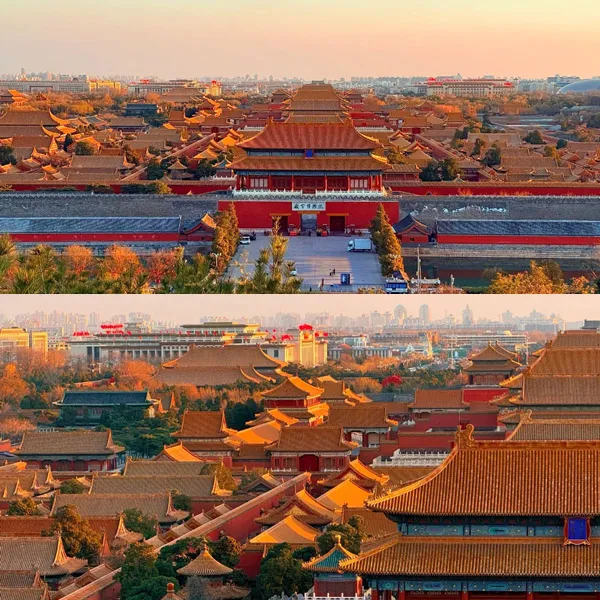
Best Photo Timing: Sunset is undeniably the golden hour here. Warm soft sunlight bathes every palace rooftop, turning the entire Forbidden City a glowing amber orange. Arrive 30 minutes before sunset to secure a prime viewing spot. For crowd-free, clean shots, visit on quiet weekday mornings right after opening. Avoid midday summer visits — harsh overhead sunlight washes out rooftop details and makes photos flat and dull.
Pro Photography Tip: Stand at the center of the south-facing railing for the ultimate symmetrical Forbidden City shot. If the area is overcrowded, the platforms directly below Wanchun Pavilion offer nearly identical unobstructed views.
Five Hilltop Pavilions: Forgotten Imperial Legends
Jingshan’s five peaks are each crowned with a traditional Chinese pavilion, all constructed in 1751 during the Qing Dynasty. Originally, every pavilion housed a unique bronze Buddha statue, representing the five fundamental traditional Chinese flavors: sour, bitter, sweet, acrid, and salty. Sadly, all precious bronze sculptures were lost and destroyed during the wars of 1900.
- Wanchun Pavilion (Center Peak): The main summit pavilion, offering the definitive Forbidden City overlook.
- Zhoushang Pavilion (Easternmost): Features stunning blue and purple glazed roofing, ideal for east-city skyline photography.
- Guanmiao Pavilion (Second East): Boasts a unique octagonal structure with elegant green-and-yellow tiled edges.
- Jifang Pavilion (West of Center): Provides excellent unobstructed views of western Beijing.
- Fulan Pavilion (Westernmost): Delivers sweeping panoramic vistas of the city’s western districts.
A continuous ridge path connects all five pavilions. If you have extra time, walking the full ridge loop lets you experience diverse layered views of Beijing’s ancient and modern cityscape.
Hidden Park Highlights Beyond the Summit
Shouhuang Hall
Located on Jingshan’s northern side, Shouhuang Hall is the second-largest imperial architectural complex in Beijing, second only to the Forbidden City. Qing Dynasty emperors used this grand red-wall, golden-roof complex to enshrine imperial ancestor portraits and hold royal worship ceremonies. Often called a “mini Forbidden City”, it features authentic imperial architecture with far fewer crowds. Note that it closes earlier than the main park (around 5–6 PM) and is regularly closed every Monday. [Official website: https://www.beijing.gov.cn]

Peony Garden (Spring Exclusive Attraction)
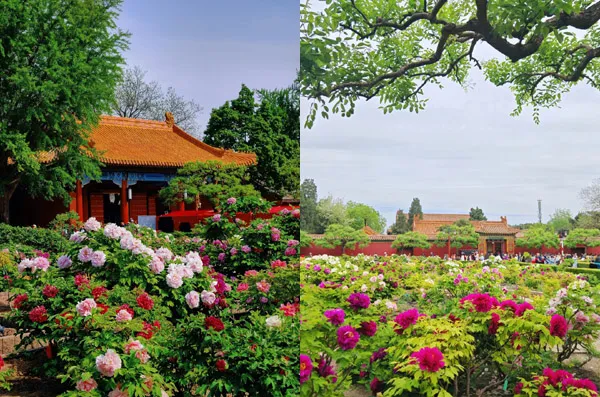
April and May mark Jingshan’s most beautiful season. The park’s sprawling peony garden blooms with over 200 varieties and a total of 20,000 peony flowers. Vibrant multicolored blossoms and delicate fragrance draw crowds of local photographers every spring, making it a hidden floral gem in central Beijing’s busy core.
Qiwang Tower
Situated near the South Gate, this elegant double-eaved ancient tower once housed a Confucius memorial tablet. Today, it serves as an exhibition space for traditional Chinese calligraphy, fine paintings, and ancient porcelain artifacts. Its classic imperial design and white marble railings make it a stunning spot for cultural photography.
No-Backtrack Walking Loop Route
For an efficient, full sightseeing experience without backtracking: Start at Wanchun Pavilion → head east down to Guanmiao Pavilion → descend to Shouhuang Hall → visit the Chongzhen crooked tree historical site → pass Qiwang Tower → exit through the South Gate. This single loop covers all of Jingshan’s core natural, historical, and scenic highlights.
Best Seasons & Visiting Hours to Avoid Crowds
Spring (April–May): Mild, pleasant weather paired with blooming peonies — perfect for casual sightseeing and relaxed walks.
Autumn (September–October): Crisp clean air, golden and red foliage, and soft warm light — the best season for sunset photography and panoramic views.
Summer: Avoid midday visits. Beijing’s summer heat is sweltering, and the park is packed with student tourists and family visitors.
Winter: Quiet, serene, and occasionally covered in snow, creating poetic winter scenery. Be sure to dress warmly, as strong hilltop winds make the temperature feel much colder.
To experience authentic local Beijing life, arrive before 9 AM. You’ll witness residents practicing tai chi, walking caged birds, and performing traditional folk dances — a genuine local scene rarely seen by most tourists. Avoid weekends whenever possible, as the summit becomes extremely crowded all afternoon.
Packing List for Jingshan Park
- Bottled water — on-site kiosks sell drinks at a marked-up price
- Comfortable walking shoes — only 150 steps total, no professional hiking gear needed
- Camera — a 24–70mm standard zoom lens works great; a polarizing filter reduces urban haze
- Light snacks — no full-service restaurants inside, only small snack stalls and a tiny teahouse
- Passport — required for on-site ticket purchases
Final Verdict: Is Jingshan Park Worth Visiting?
Absolutely, 100% worth it. For just 2 RMB and one hour of your travel time, Jingshan Park delivers Beijing’s most iconic, breathtaking panoramic view. It is the perfect, unmissable finale to any Forbidden City tour.
Even if you fail to book Forbidden City tickets (which sell out weeks in advance), Jingshan Park lets you admire the full grandeur of China’s imperial palace from above — a far better alternative than missing the landmark entirely. The only travelers who may skip the climb are those with severe mobility limitations, as there is no elevator to the summit. However, the park’s flat garden areas still offer peaceful walks and beautiful scenery for all visitors.

Simple, affordable, and endlessly memorable, Jingshan Park is hands down the best 2-yuan experience in Beijing. Climb the gentle steps, watch the golden sunset spill over the ancient imperial capital, and understand exactly why this city has stood as China’s cultural and political heart for centuries.